
For more than 150 years, McConway and Torley, LLC has stood at the heart of American industry, born in Pittsburgh in 1869 when William McConway and John C. Torley established a gray iron foundry and built a legacy rooted in craftsmanship. From pioneering the first semi-automatic center buffer railroad coupler in 1877, to serving the nation during World War II, to the modern era of advanced manufacturing, the story has always been one of innovation and American made strength. Today, that legacy continues as part of FerroWorks, a unified family committed to carrying this tradition forward.
Founding the Partnership

On January 1, 1869, William McConway and John C. Torley formed a partnership to manufacture gray iron and later malleable iron castings in Pittsburgh, Pennsylvania. The foundry, which initially produced saddlery hardware and employed 35 men, laid the foundation for what would become a legacy of industrial innovation and craftsmanship.
The Janney Coupler Innovation

In 1877, inventor Eli H. Janney patented the first semi-automatic center-buffer coupler, known as the Janney Coupler—a breakthrough that transformed the railroad industry. Janney partnered with William McConway and John C. Torley to exclusively manufacture the coupler at their Pittsburgh steel foundry, positioning the company at the forefront of rail safety and engineering excellence.
Officially Named and Incorporated
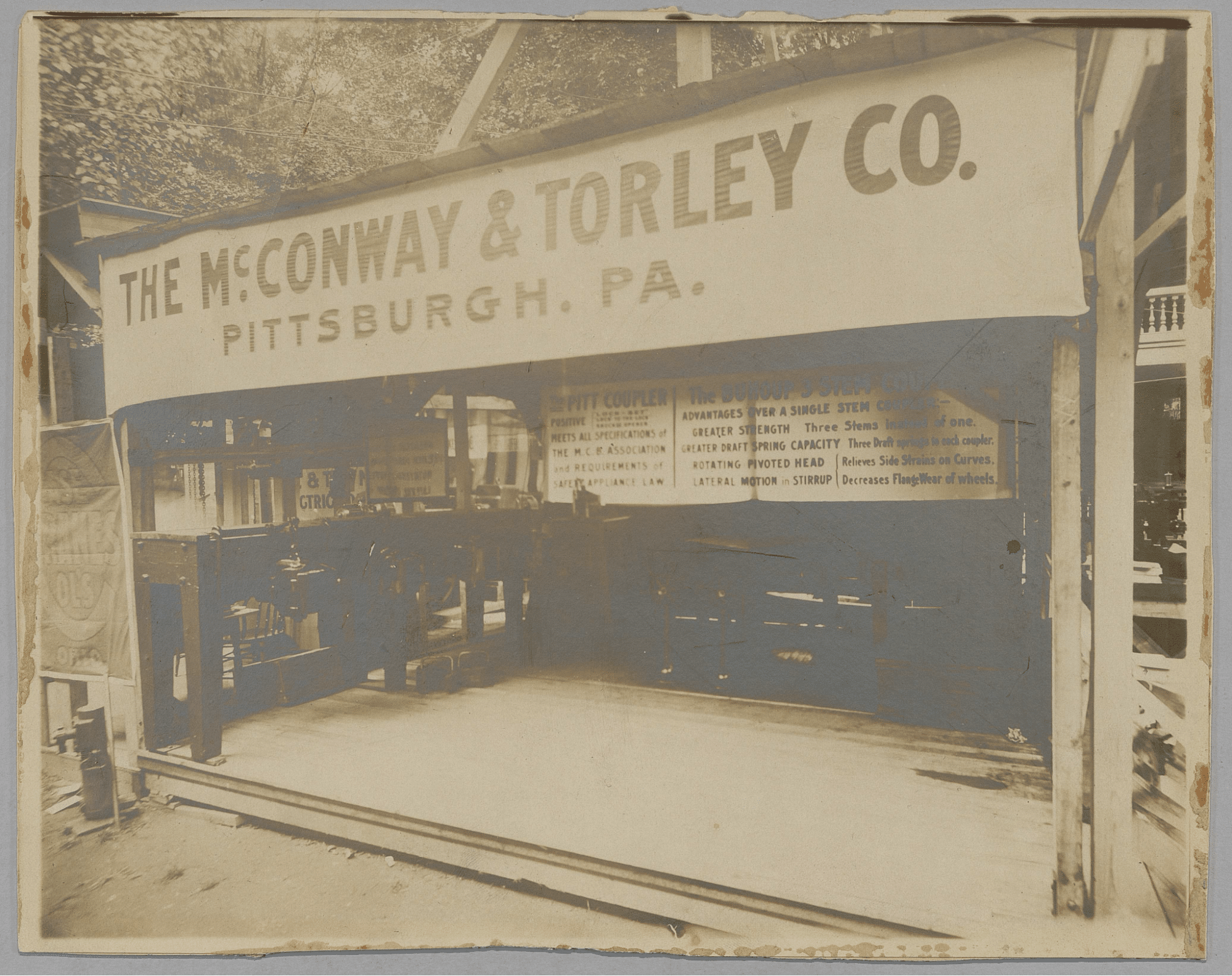
By 1880, the enterprise was officially named and incorporated as the McConway & Torley Company, formalizing the partnership between McConway and Torley and establishing the company’s identity as a leader in American foundry work.
Global Growth and Expansion
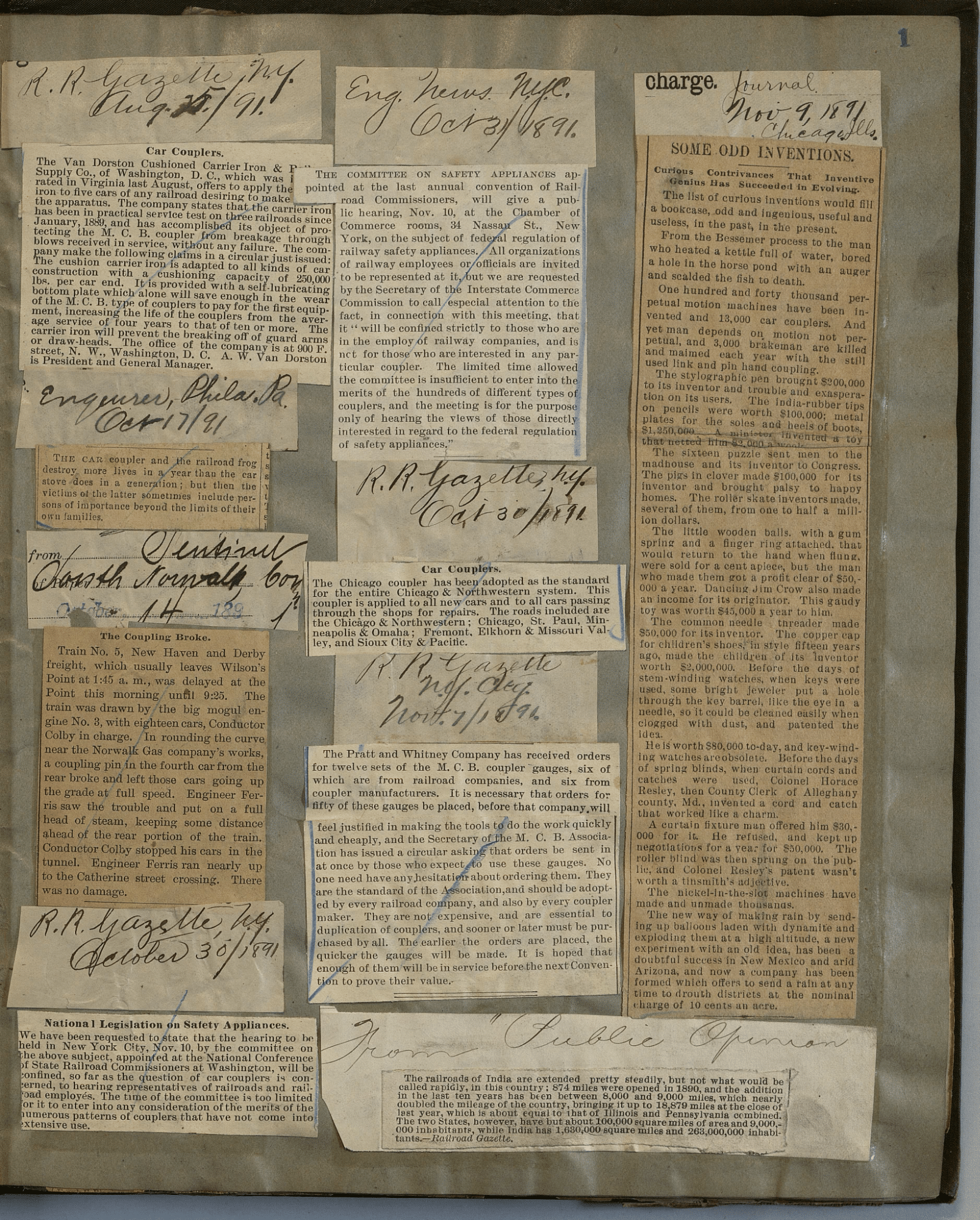
From 1890 through 1940, McConway & Torley experienced tremendous growth, becoming one of the world’s premier railroad suppliers. By 1904, the company employed more than 1,500 people and operated offices across the United States, London, Australia, China, Japan, and South America. During this period, over 90% of railcars and locomotives in China were equipped with McConway & Torley couplers, solidifying the company’s global reputation for quality and reliability.
WWII Armor Castings
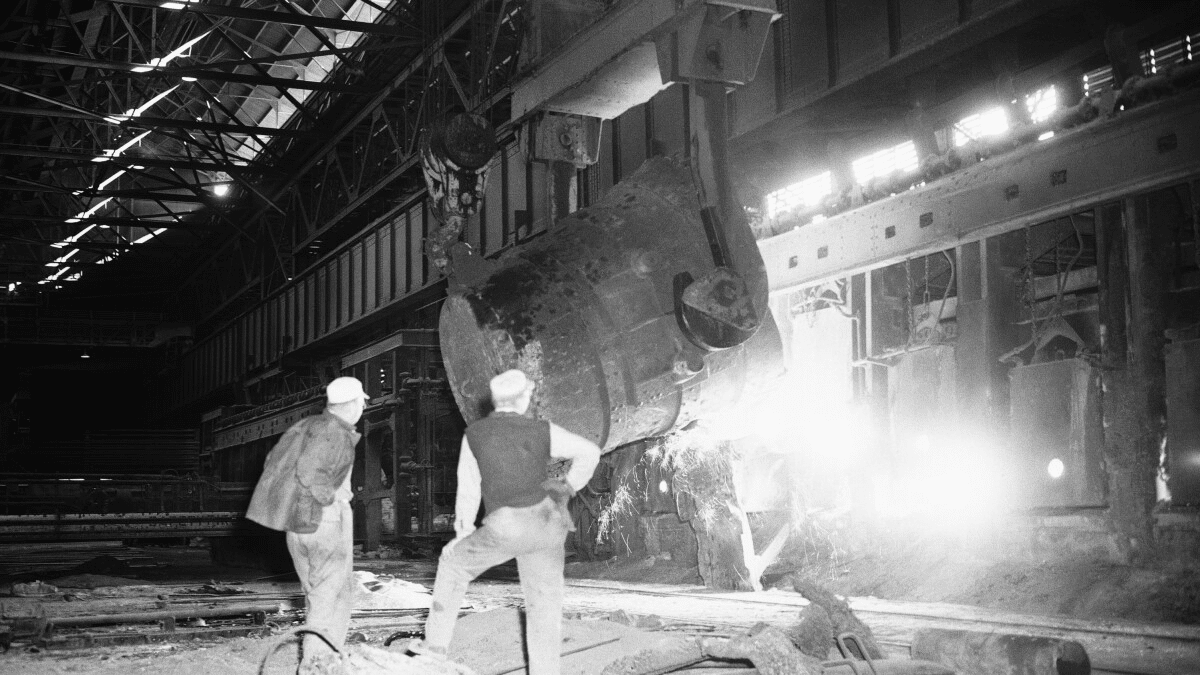
In the wake of the attack on Pearl Harbor, McConway & Torley was contracted by the U.S. War Department to produce ballistically tested armor castings for Army tanks. At a rate of roughly 1,000 tons per month, production required significant plant expansion and the installation of specialized facilities at the Pittsburgh site. Between April 1942 and June 1944, McConway & Torley proudly contributed to the Allied war effort by manufacturing armor that protected U.S. troops in combat.
Acquisition by Elliott Machine
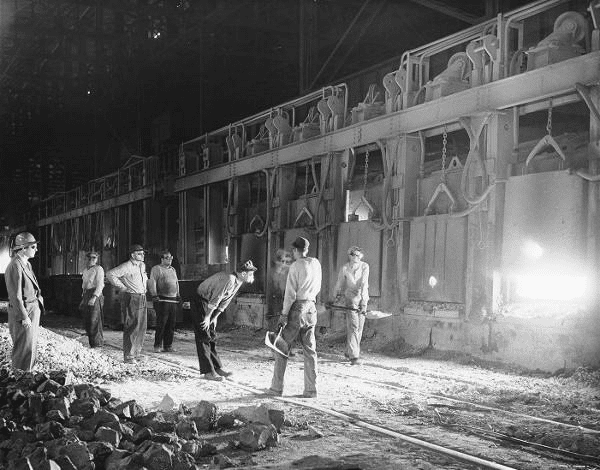
On March 19, 1957, McConway & Torley’s Pittsburgh facility and its subsidiary, Baltimore Foundry and Machining, were sold to Elliott Machine Company for $3 million. A leading dredging equipment manufacturer at the time, Elliott purchased McConway & Torley to diversify its industrial portfolio and strengthen its position in the heavy manufacturing sector.
Plant Modernization and Expansion
In 1972, the Pittsburgh plant underwent a major modernization and expansion. New Osborne jolt-squeeze molding machines were installed, and a second 20-ton electric arc furnace was added—effectively doubling melt capacity. The project also included the construction of a new scrap building, further enhancing production efficiency and capacity.
Kutztown Foundry Acquisition

In 1981, McConway & Torley purchased an iron foundry in Kutztown, Pennsylvania, initiating a major facility overhaul to support the manufacture of freight rail coupler products. This expansion broadened the company’s manufacturing footprint and strengthened its production capabilities for the railroad industry.
McConway Railroad Products Established
By 1988, McConway & Torley launched McConway Railroad Products, a Pittsburgh-based subsidiary offering full-service, AAR-approved coupler reconditioning and casting reclamation. This addition reflected the company’s commitment to sustainability and service excellence across the full lifecycle of its products.
Acquisition by Trinity Industries, Inc.
In 1998, Trinity Industries, Inc., McConway & Torley’s largest customer, acquired McConway & Torley LLC, integrating the company into one of the nation’s leading industrial manufacturing organizations and positioning it for long-term stability and continued innovation in rail component production.
$50 Million Plant Modernization

In 2005, McConway & Torley initiated a $50 million modernization project at its Pittsburgh facility, featuring the installation of Kunkel-Wagner automated mold-making equipment. This investment doubled mold output capacity and represented a major leap forward in production efficiency and precision casting technology.
Kutztown Operations Temporarily Suspended
In 2012, McConway & Torley temporarily ceased operations at its Kutztown plant as part of a broader strategic realignment. The company continued to focus operations at its Pittsburgh facility, where its legacy of foundry excellence and rail innovation continued.
Modernization Completed
By 2014, McConway & Torley had completed its plant modernization initiative, adding three new automated core-making machines with robotic core handling, upgraded sand transportation and reclamation systems, and a completely overhauled sand and dust collection system with a new baghouse. These advancements made the Pittsburgh Foundry one of the most technologically advanced steel foundries in the world.
Formation of FerroWorks
In 2024, Stellex Capital Management, a middle-market private equity firm, acquired McConway & Torley and Standard Forged Products from Arcosa, Inc. The acquisition led to the formation of FerroWorks, which unites McConway & Torley, Kutztown Foundry & Machining, McKees Rocks Forgings, and Standard Forged Products under one corporation.
Stellex announced that the new ownership would accelerate growth through strategic investment, operational excellence, and targeted expansion across complementary markets. David Meyer, a 25-year industry veteran, was appointed CEO, joining a strong, experienced leadership team. Together, they aim to build on more than 150 years of American manufacturing expertise, continuing the legacy of producing high-quality, American-made products for the nation’s most demanding industries.


